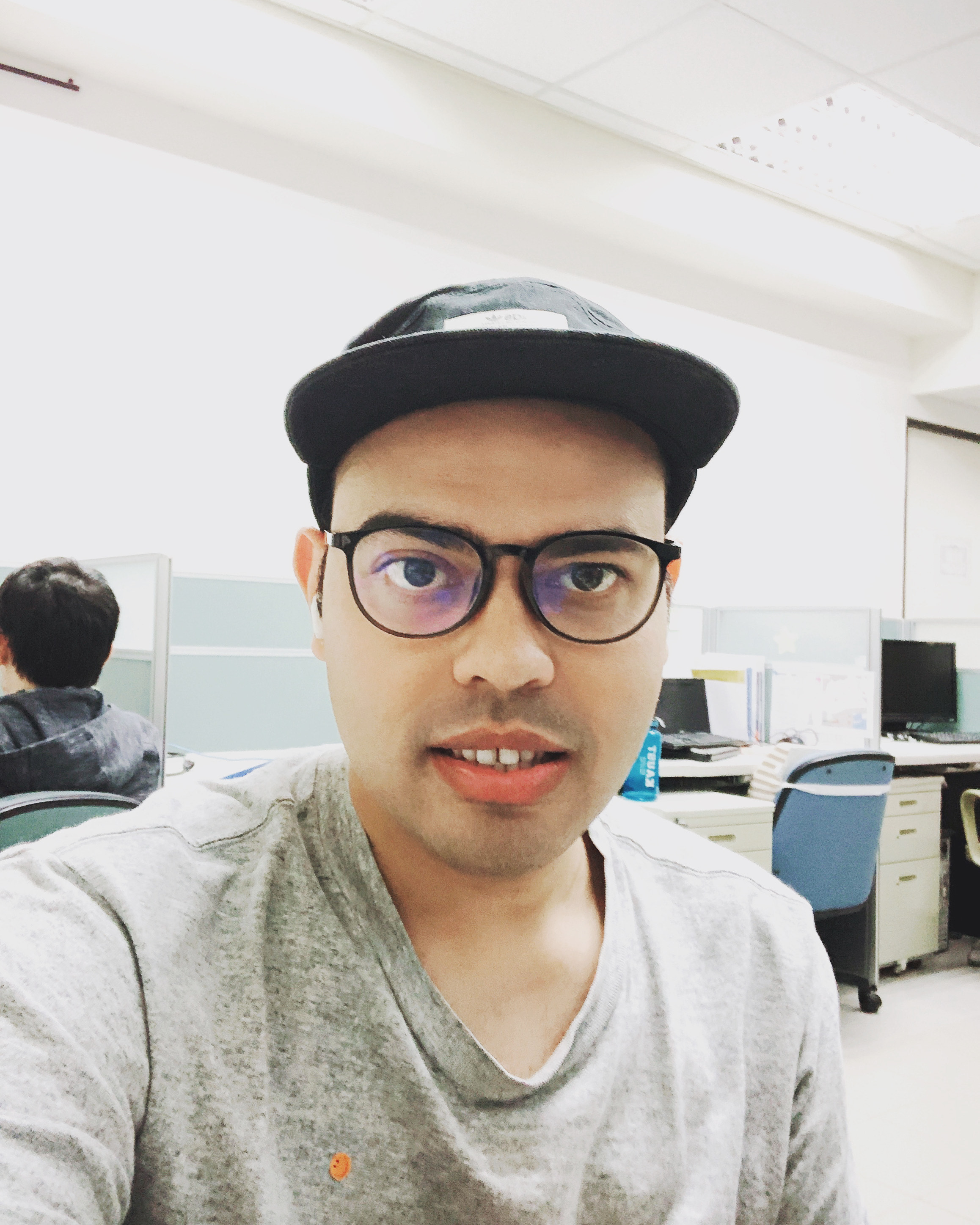
Utpal Kumar, PhD
Computational Seismologist | Structural Health Monitoring | Scientific Software and HPC
I am an Assistant Project Scientist at the Berkeley Seismological Laboratory, University of California, Berkeley. I build scalable computational workflows that connect geophysics with modern software architecture, with an emphasis on seismic, geodetic, and distributed sensing applications.
My current work focuses on smartphone-based ambient vibration analysis for structural health monitoring, real-time processing pipelines, and large-scale scientific computing for seismic imaging.
Experience
- Assistant Project Scientist, Berkeley Seismological Laboratory, University of California, Berkeley (2025-Present)
- Postdoctoral Researcher, Department of Earth and Planetary Science, University of California, Berkeley (2021-2025), with Prof. Richard M. Allen
- Postdoctoral Researcher, Department of Earth and Planetary Science, University of California, Berkeley (2021-2023), with Prof. Barbara Romanowicz
- Postdoctoral Researcher, Institute of Earth Sciences, Academia Sinica, Taiwan (2020-2021), with Prof. Bor-Shouh Huang
Education
- Ph.D., Computational Geophysics (2014-2020), National Central University and Academia Sinica (TIGP Fellowship)
- Integrated B.S.-M.S., Earth Sciences (2009-2014), IISER Kolkata, India (INSPIRE Fellowship)
Computing and Technical Skills
| Area | Tools and Expertise |
|---|---|
| HPC and Cloud Computing | MPI, OpenMP, SLURM; Berkeley SAVIO, NERSC (Cori/Perlmutter), Anvil, TACC; Docker, Kubernetes, AWS, GCP |
| Scientific Programming | Python (NumPy, SciPy, Pandas), C/C++, Fortran, MATLAB; CMake, Make; optimization of scientific workflows |
| Geophysical Data Systems | miniSEED, StationXML, SAC; HDF5/Zarr, netCDF; ObsPy, SPECFEM, GMT/PyGMT |
| Databases and Storage | PostgreSQL, MongoDB, InfluxDB (time series), Redis, SQLite; management of large geophysical archives |
| Real-Time Architectures | Kafka, RabbitMQ, WebSockets; gRPC and FastAPI services; low-latency alerting and processing pipelines |
| DevOps and Reproducibility | Git, GitHub Actions, pytest (unit/integration/end-to-end), semantic versioning, Sphinx/ReadTheDocs |
| Machine Learning | PyTorch, TensorFlow; ML-based feature extraction, signal processing, and inference pipelines for geophysical data |
Technical Skills & Proficiency
I present my core technical stack below with a practical proficiency view based on my current project work.
HPC and Parallel Computing (SLURM, MPI, OpenMP)
Seismology Toolchain (ObsPy, SPECFEM, GMT/PyGMT)
Scientific Data Formats (miniSEED, StationXML, HDF5/Zarr, netCDF)
CI/CD and Testing (GitHub Actions, pytest, docs workflows)
Databases (PostgreSQL, MongoDB, InfluxDB, SQLite)
Cloud and Containers (Docker, Kubernetes, AWS, GCP)
Real-Time Data Systems (Kafka, RabbitMQ, Redis, WebSockets)
API and Service Development (FastAPI, gRPC)
Machine Learning for Geophysical Signals (PyTorch, TensorFlow)
C/C++ and Fortran
MATLAB
Current Research
- MyShake statewide structural health monitoring in California: extracting and tracking building dynamic properties from ambient smartphone accelerometer recordings.
- Automated building seismic monitoring and event processing in Taiwan: continuous acquisition, deep-learning phase picking, and large-scale event analysis.
- Yellowstone mid-mantle seismic imaging using full-waveform inversion and broadband synthetic waveform modeling.
- Scalable real-time geophysical data systems for seismic and citizen-science data streams.
Ph.D. Thesis
- Ph.D. Dissertation: Read
Publications
Selected Peer-Reviewed
- Kumar, U., Marcou, S., and Allen, R. M. (2025). Ambient vibration analysis of high-rise buildings using MyShake smartphone data. Journal of Building Engineering, 106, 112496. https://doi.org/10.1016/j.jobe.2025.112496
- Patel, S. C., Gunay, S., Marcou, S., Gou, Y., Kumar, U., and Allen, R. M. (2023). Toward structural health monitoring with the MyShake smartphone network. Sensors, 23(21), 8668. https://doi.org/10.3390/s23218668
- Kumar, U., Legendre, C. P., Zhao, L., and Chao, B. F. (2022). Dynamic Time Warping as an alternative to windowed cross correlation in seismological applications. Seismological Research Letters. https://doi.org/10.1785/0220210288
- Kumar, U., Legendre, C. P., Lee, J.-C., Zhao, L., and Chao, B. F. (2022). On analyzing GNSS displacement field variability of Taiwan: Hierarchical agglomerative clustering based on Dynamic Time Warping technique. Computers and Geosciences, 169, 105243. https://doi.org/10.1016/j.cageo.2022.105243
- Kumar, U., and Legendre, C. P. (2022). Crust-mantle decoupling beneath Afar revealed by Rayleigh-wave tomography. Scientific Reports, 12(1), 17036. https://doi.org/10.1038/s41598-022-20890-5
- Kumar, U., Legendre, C. P., and Huang, B. S. (2021). Crustal structure and upper mantle anisotropy of the Afar triple junction. Earth, Planets and Space, 73(1), 166. https://doi.org/10.1186/s40623-021-01495-0
- Kumar, U., and Legendre, C. P. (2021). STADIUM-Py: Python command-line interface for automated receiver functions and shear-wave splitting measurements. Zenodo. https://doi.org/10.5281/zenodo.4686103
- Kumar, U., Chao, B. F., and Chang, E. T.-Y. (2020). What causes the common-mode error in array GPS displacement fields: Case study for Taiwan in relation to atmospheric mass loading. Earth and Space Science. https://doi.org/10.1029/2020EA001159